Why 5-Axis CNC Machining Is Transforming Modern Manufacturing
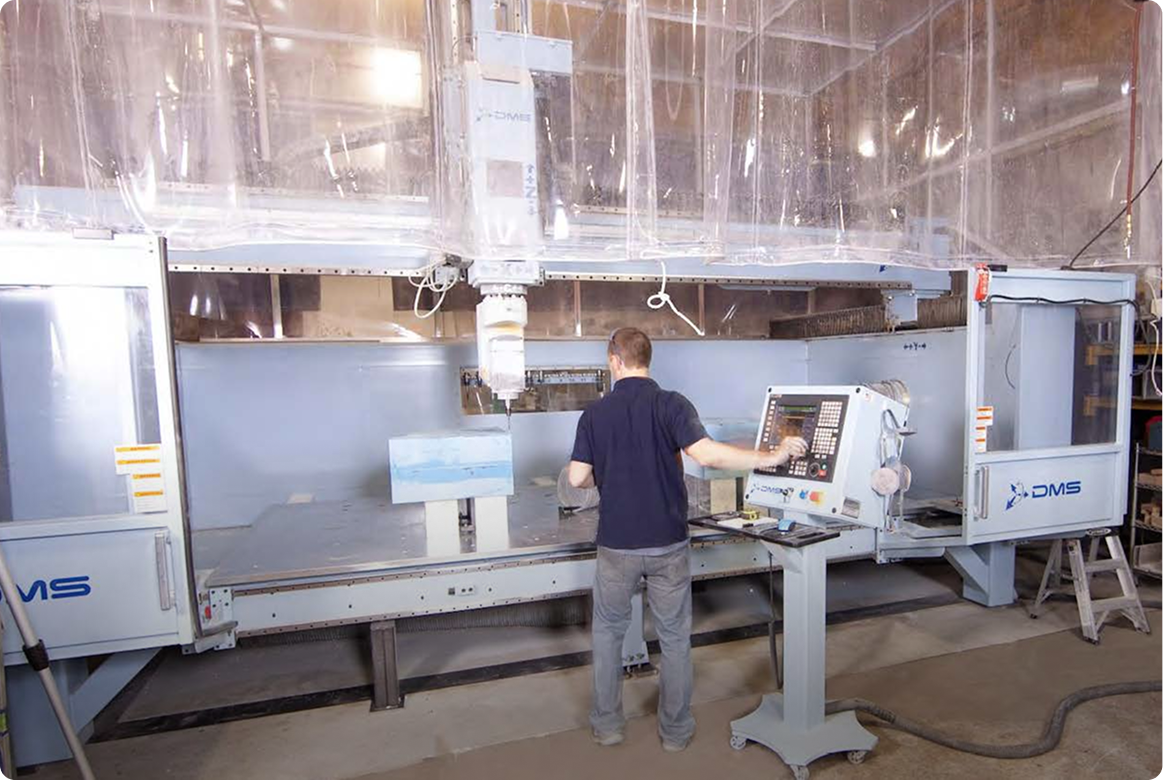
Manufacturing has evolved dramatically over the last few decades. Products are becoming more complex, tolerances are becoming tighter, and industries expect higher quality while demanding shorter lead times. From aerospace components and medical devices to industrial equipment and advanced electronics, manufacturers need production methods that can deliver accuracy, consistency, and efficiency. This is where 5-axis cnc machining has become one of the most important technologies in modern manufacturing.
Companies that invest in advanced machining capabilities can produce intricate parts with remarkable precision while reducing production time and minimizing material waste. As industries continue to push the boundaries of innovation, the demand for high-quality machining services continues to grow.
The Evolution of CNC Technology
Traditional machining methods required significant manual intervention and multiple setups to create complex parts. While these processes were effective for simpler components, they often increased production time and introduced opportunities for errors.
The introduction of cnc machining changed the manufacturing landscape by automating cutting operations and allowing machines to follow highly detailed digital instructions. Computer-controlled equipment enabled manufacturers to achieve consistent results while reducing variability between parts.
Over time, CNC technology advanced beyond simple three-axis systems. Manufacturers began adopting more sophisticated solutions capable of moving cutting tools and workpieces in multiple directions simultaneously. This advancement led to the widespread adoption of 5-axis cnc machining, which offers a level of flexibility and precision that traditional methods cannot match.
Understanding 5-Axis CNC Machining
A standard CNC machine typically moves along three linear axes: X, Y, and Z. While this configuration can produce many types of components, complex geometries often require multiple setups and repositioning of the workpiece.
With 5-axis cnc machining, the machine adds two rotational axes to the standard movement system. This allows the cutting tool to approach the workpiece from virtually any angle during a single setup.
The benefits are significant:
- Reduced setup time
- Improved accuracy
- Enhanced surface finishes
- Greater design flexibility
- Faster production cycles
- Lower risk of alignment errors
Instead of repeatedly removing and repositioning a component, manufacturers can complete highly complex operations in a single machining cycle.
Why Precision Matters in Manufacturing
Precision is one of the defining factors of quality manufacturing. Even a minor dimensional error can affect product performance, safety, and reliability.
Industries such as aerospace, defense, automotive, and medical manufacturing often require tolerances measured in thousandths of an inch. Components must fit perfectly within larger assemblies while maintaining their structural integrity under demanding operating conditions.
This is why businesses increasingly seek experienced precision machining companies capable of meeting strict engineering requirements. Advanced machining equipment, skilled programmers, and robust quality control procedures work together to ensure every component meets exact specifications.
Benefits of 5-Axis CNC Machining
Improved Accuracy
One of the greatest advantages of 5-axis cnc machining is the ability to machine a part in a single setup. Every time a component is repositioned, there is a possibility of introducing slight alignment errors.
By minimizing setups, manufacturers can achieve exceptional dimensional accuracy and repeatability.
Faster Production
Efficiency is critical in modern manufacturing. Multiple setups not only increase labor costs but also extend production timelines.
With advanced machining systems, manufacturers can reduce cycle times while maintaining quality. Faster production means shorter lead times and improved responsiveness to customer demands.
Better Surface Finishes
Complex contours and curved surfaces often require specialized machining strategies. Because five-axis machines can maintain optimal tool positioning throughout the cutting process, they often produce smoother surface finishes than conventional machining methods.
This reduces the need for secondary finishing operations and helps lower overall production costs.
Greater Design Freedom
Engineers are no longer limited by the constraints of traditional machining.
Complex geometries, deep cavities, undercuts, and intricate surfaces can be manufactured more efficiently using 5-axis cnc machining. This allows designers to optimize component performance without compromising manufacturability.
Reduced Tool Wear
Proper tool orientation helps maintain consistent cutting conditions throughout the machining process.
As a result:
- Cutting tools last longer
- Heat generation is reduced
- Machining stability improves
- Maintenance costs decrease
These advantages contribute to more efficient production and improved profitability.
Industries That Depend on Advanced CNC Machining
Aerospace
The aerospace industry demands some of the highest manufacturing standards in the world.
Aircraft components must be lightweight, durable, and dimensionally accurate. Complex turbine blades, structural brackets, housings, and engine parts often require advanced machining solutions to achieve required tolerances.
Many aerospace manufacturers rely heavily on cnc machining to produce critical components that must perform reliably under extreme conditions.
Medical Manufacturing
Medical devices require precision, consistency, and exceptional quality.
Surgical instruments, orthopedic implants, dental components, and diagnostic equipment often contain intricate features that demand advanced machining capabilities.
Even the smallest deviation can affect patient outcomes, making precision manufacturing essential.
Automotive
The automotive sector continuously seeks lighter, stronger, and more efficient components.
From performance engine parts to transmission components and prototype development, 5-axis cnc machining enables manufacturers to produce complex designs while maintaining high production standards.
Defense
Defense applications often require specialized components manufactured to exact specifications.
Precision-machined parts are used in communication systems, vehicles, weapons platforms, and surveillance equipment. Reliability and consistency are critical in these demanding environments.
Industrial Equipment
Manufacturing facilities depend on custom-machined parts for machinery, automation systems, and production equipment.
High-quality cnc machining allows manufacturers to create durable components capable of withstanding heavy use and harsh operating conditions.
The Role of Precision Machining Companies
Not all machining providers offer the same level of expertise or technological capability.
Leading precision machining companies invest heavily in advanced equipment, highly trained personnel, and rigorous quality assurance processes. Their ability to handle complex projects often determines the success of their customers’ products.
When evaluating a machining partner, manufacturers typically consider:
- Technical capabilities
- Industry experience
- Quality certifications
- Material expertise
- Production capacity
- Inspection processes
- Delivery performance
A reliable machining partner becomes an extension of the customer’s engineering and production teams.
Material Capabilities in Modern CNC Machining
Today’s machining operations work with a wide variety of materials, each presenting unique challenges.
Common materials include:
Aluminum
Aluminum remains one of the most popular machining materials due to its excellent strength-to-weight ratio and corrosion resistance.
Stainless Steel
Widely used in medical, industrial, and food-processing applications, stainless steel offers exceptional durability and resistance to corrosion.
Titanium
Titanium is highly valued in aerospace and medical industries because of its strength, lightweight characteristics, and biocompatibility.
Brass and Copper
These materials are frequently used in electrical and fluid-handling applications due to their conductivity and machinability.
Engineering Plastics
Many advanced polymers can be machined to create lightweight, durable components for specialized applications.
The versatility of modern cnc machining allows manufacturers to work with virtually any engineering-grade material.
Quality Control in Precision Manufacturing
Advanced equipment alone does not guarantee exceptional results.
Quality control plays a vital role throughout the manufacturing process. Leading precision machining companies implement comprehensive inspection procedures to verify every dimension and critical feature.
Inspection methods may include:
- Coordinate measuring machines (CMMs)
- Laser measurement systems
- Optical inspection equipment
- Surface finish analysis
- First article inspections
- Statistical process control
These systems help ensure that finished components consistently meet customer requirements.
The Future of CNC Machining
Manufacturing technology continues to evolve rapidly.
Artificial intelligence, machine learning, automation, and digital manufacturing systems are becoming increasingly integrated into machining operations. These innovations allow manufacturers to optimize tool paths, monitor machine performance, and improve production efficiency.
At the same time, customer expectations continue to rise. Manufacturers are demanding tighter tolerances, faster turnaround times, and greater flexibility.
As a result, 5-axis cnc machining will remain a critical technology for producing high-performance components across a wide range of industries.
Companies such as Statt Engineering demonstrate how advanced machining capabilities can support customers requiring complex, high-precision parts for demanding applications.
Choosing the Right Manufacturing Partner
Selecting the right machining provider is one of the most important decisions a manufacturer can make.
A capable partner should offer advanced equipment, experienced personnel, strong quality systems, and a commitment to continuous improvement. Whether producing prototypes, short-run components, or large-scale production orders, the ability to deliver consistent quality remains essential.
As product designs become increasingly sophisticated, manufacturers continue to rely on precision machining companies that can combine technical expertise with advanced manufacturing technology.
Conclusion
Modern manufacturing depends on accuracy, efficiency, and innovation. Advanced cnc machining technologies have enabled manufacturers to create components that were once considered impossible to produce efficiently.
Among these technologies, 5-axis cnc machining stands out as one of the most transformative developments in precision manufacturing. Its ability to produce complex parts with exceptional accuracy, reduced setup times, and superior surface finishes makes it an invaluable tool across industries ranging from aerospace and medical to automotive and industrial equipment.
As product complexity continues to increase, businesses will increasingly depend on experienced precision machining companies capable of delivering the quality, consistency, and technical expertise required for tomorrow’s manufacturing challenges.